ANN ARBOR, Mich. – See the Ann Arbor Farmers Market in bloom with the return of Flower Day this Sunday.
From 10 a.m. to 4 p.m, the Ann Arbor Farmers Market will be turned into a floral wonderland for its annual celebration of flowers and plants.
Growers will be offering up flowers, plants, hanging baskets, vegetable and herb starts, potted herbs and floral bouquets.
Taking place the Sunday of Memorial Day weekend, Flower Day coincides with the Sunday Artisan’s Market this year. The Sunday market gives local artisans a place to sell specialty wares, including candles, soap and body care products, jewelry, art, among others.
Community members attending the event will be required to wear masks and must remain physically distant while browsing. Health and safety protocols are posted around the market and hand washing stations are available.
Free parking will be available in the municipal lot on the corner of Fourth and Catherine Streets, as well as at the courthouse, according to the Flower Day event page.
The Ann Arbor Farmers Market is held in Kerrytown at 315 Detroit St.
May 28, 2021 at 09:05AM
https://www.clickondetroit.com/all-about-ann-arbor/2021/05/28/get-ready-for-ann-arbor-farmers-markets-flower-day-happening-this-sunday/
Get ready for Ann Arbor Farmers Market’s Flower Day happening this Sunday - WDIV ClickOnDetroit
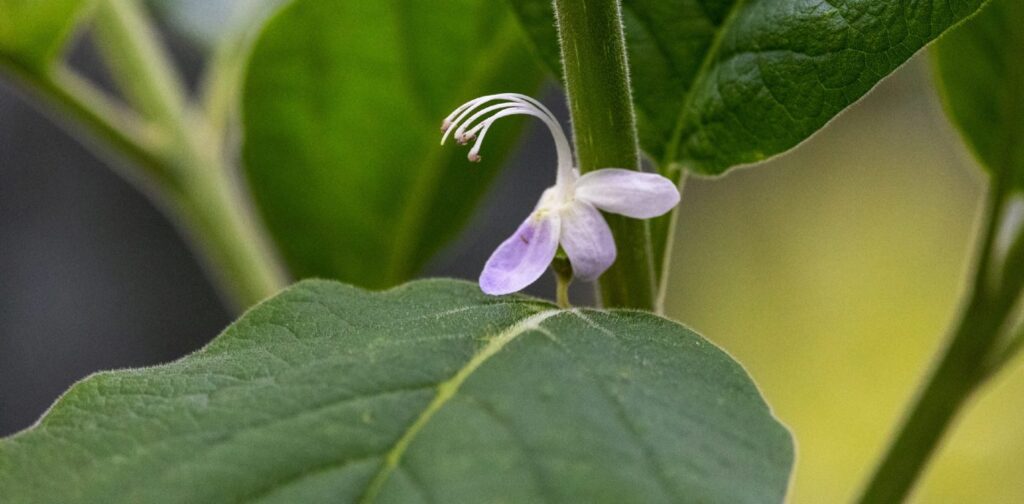
In a greenhouse in Missouri, a tree listed as critically endangered produced a flower which had never been recorded before by science in the perfect metaphor for the species’ chances of survival.
The botanists caring for it believe there’s no question they can save the tree since collecting pollen from this flower, as they can now cross-pollinate its thirty-strong sapling neighbors to restore genetic diversity.
Karomia gigasis a member of the mint family, and is also related to oregano, rosemary, and thyme. It grows wild only in East-Central Africa, in Tanzania, and in the past in Kenya. It’s so unknown there’s no common name for it in English, Swahili, or any other African language.
The flower it produced consisted of five purple petals tugged down towards the stem, and four long pollen stamens protruding from the center.
Growing straight up to heights of 80 feet, it’s thought one reason there is no image of the flower in the scientific record is that an adult K. gigas doesn’t produce branches until halfway up the trunk, so the rapidly-wilting flowers simply emerge too high to be seen.
The un-minty nature of the flowers lead scientists to hypothesize it could be a self-pollinating tree, and they hope to find more flowers in the coming months that will allow them to strengthen the genetic diversity of the remaining trees.
They can clone individual trees from cuttings, but that doesn’t do anything to increase genetic diversity, which is key to ensuring the long-term survival of the species and its ability to resist disease.
Growing hope
As well as growing in a difficult-to-replicate kind of soil substrate consisting primarily of old corral and termite leavings, K. gigas is very susceptible to fungus, and its wood is similar to teak, and so is occasionally poached. All this pressure puts the tree among the most endangered of the 60,000-known tree species.
It was discovered in Kenya in 1977, then rediscovered in Tanzania in 1993 after all the Kenyan specimens died out.
Apart from the thirty saplings growing in the Missouri Botanical Garden in St. Louis, the Tanzanian Forest Service estimate there are two dozen or more others, but only in Mitundumbea Forest Reserve and Litipo Forest Reserve in Tanzania, both of which are protected areas characterized by flat woodlands that used to be the ocean floor.
“On one side of the coin it’s a little scary because very rare species like this are depending upon us and we can’t get it wrong,” writes Andrew Wyatt, Senior Vice President of Horticulture and Living Collections at the Missouri Botanic Gardens, the oldest continually operating gardens in the nation.
“Personally, and I know others on my staff feel this way too, it is actually amazing and exhilarating. It is such an honor to use one’s skill to save a species from extinction.”
“As far as survival, we’ve got this one,” says Wyatt, this time to National Geographic. “We can actually make sure it does not go extinct. The idea of actually preserving the species is entirely possible. It’s protected in Tanzania. We have collections in the botanical garden. Once we’ve got enough seed, we hope we can store it [in a freezer] and create a buffer between loss.”
It’s good he and his staff are so confident. Based on how many houseplants this reporter has killed, he can only imagine the pressure they’re under.
Tasting room open: The Highwayman tasting room, The Barn, is now open on the Plaza in the red barn. The tasting room is open Wednesday through Sunday from 10 a.m. to 5 p.m. Email joey@highwaymanwines.com to make a reservation or visit highwaymanwines.com/visit.
Flower stand: A homegrown flower stand is popping up on Saturday mornings on Seventh Street East. Learn more about 7th St. Flowers on Instagram @7thStFlowers. Kari Cople offers bouquets and arrangements through subscriptions as well.
Not yet open: One downtown business that has yet to reopen appears to be Sbragia’s tasting room at 520 Broadway. The tasting room opened in mid-2018 and has been closed since March of 2020. The company’s Dry Creek location has reopened.
People’s Choice: On Sunday, May 30, the nominations for the Sonoma Valley People’s Choice Awards will close. Visit sonomanews.com/peopleschoice to vote for up to five nominees per category, from auto mechanic to winery with a view. Be sure to check your email and verify your vote, so the nominations count. Nominations will be accepted until midnight.
New name: Ramekins is now officially the Seven Branches Venue and Inn. A new sign is up on the property at 450 W. Spain St., which is part of Sonoma’s Best Hospitality Group. A request for more information about the origin of the new name was not answered by press time.
Suicide prevention: May is Mental Health Awareness Month, as well as the 50th anniversary of the 24/7 Suicide Prevention Hotline serving Sonoma County. More than 300,000 local people in crisis have called this line and received help. The number is (855) 587-6373 and the toll-free number is administered by the North Bay Suicide Prevention Program of Buckelew Programs.
Good company: Valley Bar and Bottle on the Plaza was included in Esquire magazine’s new list of 2021's Best Bars in America - one of 27 bars across the country.
Storage: The giant new Vineburg Wine & Self Storage at 1010 Napa Road, at the corner of Eighth Street East, is almost open and currently taking reservations. The 65,000-square-foot facility includes self services and full climate-control units as well as cask storage, and is scheduled to open in June. totalstoragesolutions.com.
Sale extended: Pets Lifeline’s Last Chance Sale of handbags and accessories has been extended and will run this Friday and Saturday from 9 a.m. to 1 p.m. at 801 Broadway.
Becoming Independent: The nonprofit social-impact organization Becoming Independent supports adults with intellectual and developmental disabilities. It is launching a new initiative to expand workforce training and development by turning its Santa Rosa HQ into a 24,000-square-foot training ground for workforce development in the hospitality, food, administrative, manufacturing and agriculture industries, where it will provide vocational training and certifications. A 10,000-square-foot flexible indoor/outdoor event space will also be available for the community to rent.
Barn crawl: Charlie's Acres is hosting a Barn Crawl on Saturday, June 5 as a fundraiser for the Napa Road animal sanctuary. This brews and bites and add in pigs, cows, goats, and more. Tannery Bend Beerworks and (plant-based) bites from Dahlia will be featured. Visit charliesacres.org to register.
Honor: The town of Sonoma has been named one of the top 10 best small towns to visit in the USA by U.S. News & World Report. The list, part of U.S. News & World Report’s 2021-22 Best Vacations Rankings, featured American small towns like Bar Harbor, ME, which took the number one spot this year, Lake Tahoe (#4), Monterey (#11), Martha’s Vineyard (#17) and Salem (#25). The rankings are based on “an analysis of expert and user opinions.”
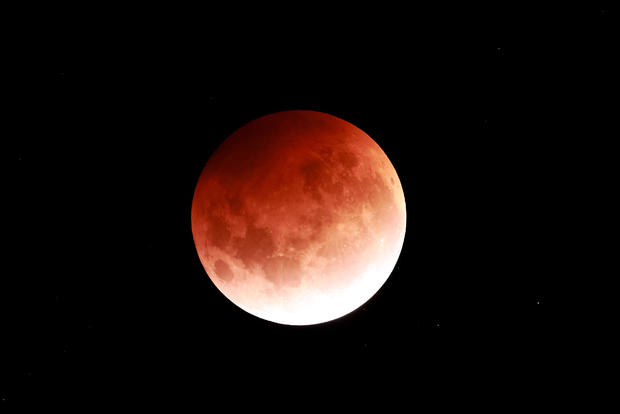
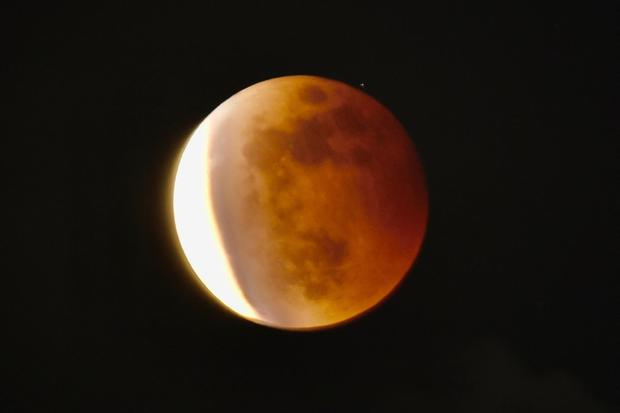
Skywatchers around the world were treated to the most spectacular full moon of the year in the early morning hours on Wednesday. May 26 marked not just a supermoon, but also a lunar eclipse, or so-called "blood moon."
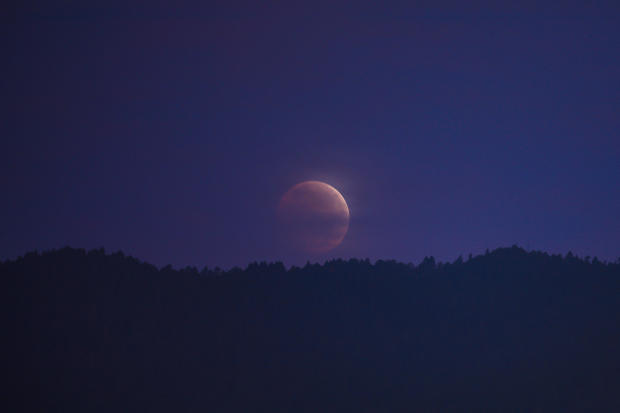
According to NASA, a blood moon occurs during a total lunar eclipse, when the Earth is positioned directly between the moon and the sun. Earth's atmosphere filters the sunlight, scattering blue light but allowing red light to pass through.
Wednesday also marked the year's best supermoon. A supermoon occurs when the moon appears larger than usual in the night sky because it is at its closest point to Earth in its orbit, known as the perigee.
May's full moon is additionally known as the "Flower Moon," named for the abundance of flowers associated with spring in the Northern Hemisphere.
Astrophotographers around the globe captured breathtaking images of the event, which was clearly visible in Asia and Australia, as well as much of the U.S. and South America.
New Zealand
The total lunar eclipse is seen on May 26, 2021, in Auckland, New Zealand. Phil Walter/Getty Images
Australia
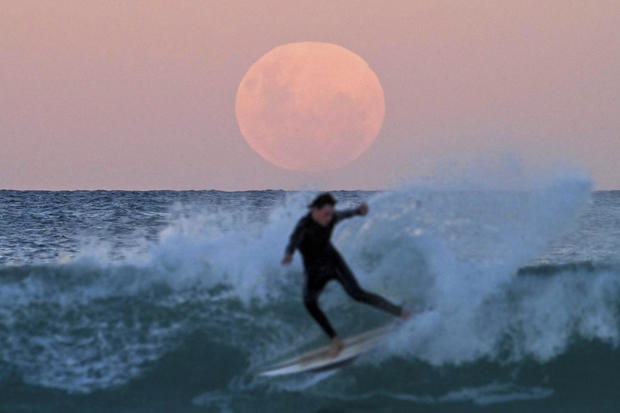
A surfer is seen as the "Super Flower Blood Moon" rises over the Pacific Ocean at Bondi Beach in Sydney, Australia, on May 26, 2021. Steven Saphore/Anadolu Agency via Getty Images
Brazil
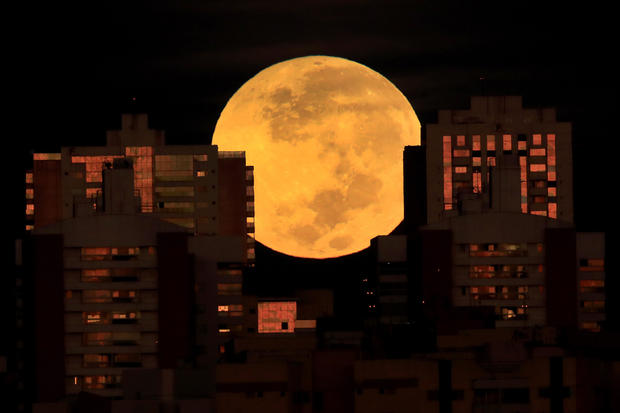
A lunar eclipse is observed during dawn in Brasilia, Brazil, Wednesday, May 26, 2021.Eraldo Peres / AP
Britain
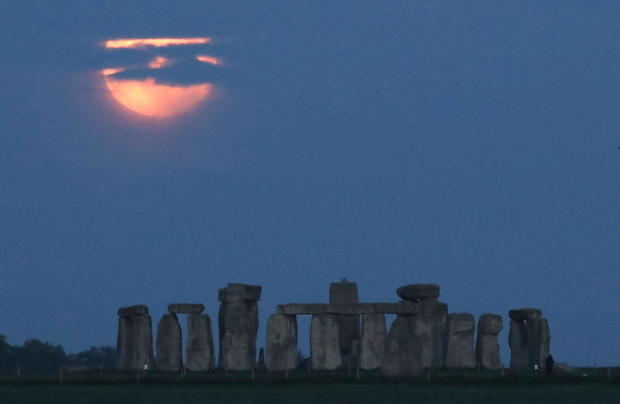
The full moon is seen behind Stonehenge stone circle near Amesbury, Britain, May 26, 2021.PETER CZIBORRA / REUTERS
Hong Kong
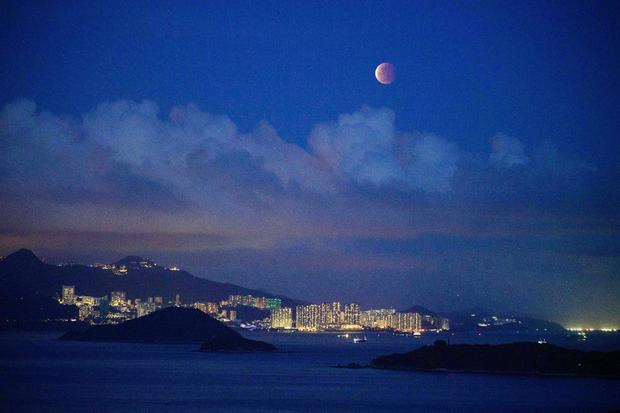
The moon is pictured above Hong Kong on May 26, 2021, during a total lunar eclipse.ANTHONY WALLACE/AFP via Getty Images
California
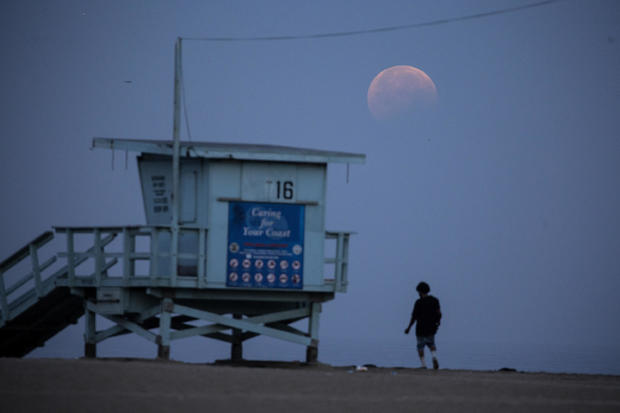
The full moon sets over Santa Monica Beach in Santa Monica, California, Wednesday, May 26, 2021. Ringo H.W. Chiu / AP
Mexico
The lunar eclipse is seen on May 26, 2021, in Mexico City, Mexico. Manuel Velasquez/Anadolu Agency via Getty Images
Taiwan
A full moon is seen during a partial eclipse in Taipei on May 26, 2021. SAM YEH/AFP via Getty Images
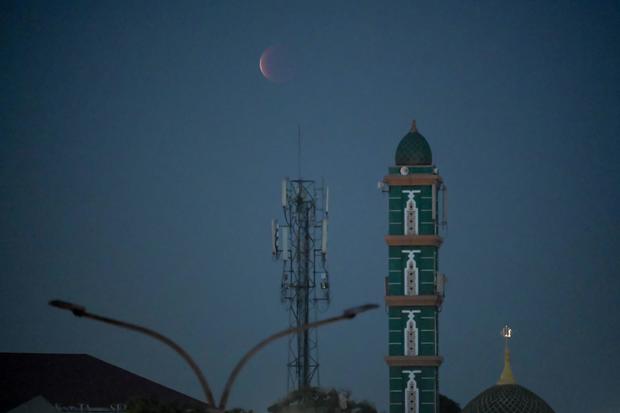
Indonesia
The moon is pictured above Jakarta on May 26, 2021, during a total lunar eclipse.BAY ISMOYO/AFP via Getty Images
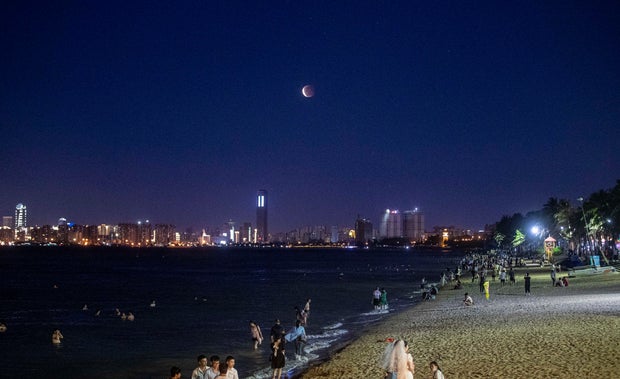
China
A total lunar eclipse occurs in the night sky of Haikou, the capital of southwest China's Hainan Province, on May 26, 2021.Costfoto/Barcroft Media via Getty Images
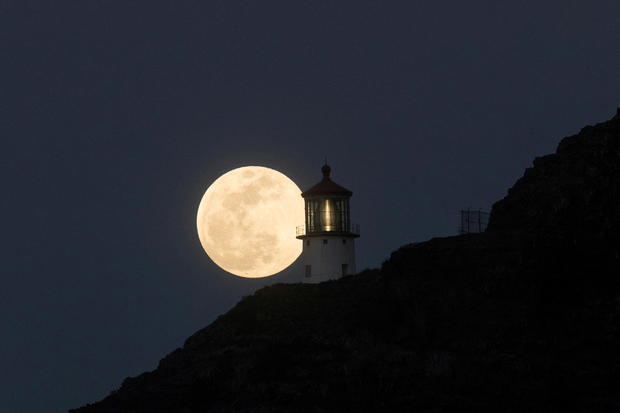
Hawaii
The full moon rises over the Makapuu lighthouse in east Oahu, Honolulu, Hawaii, U.S., on May 25, 2021. MARCO GARCIA / REUTERS
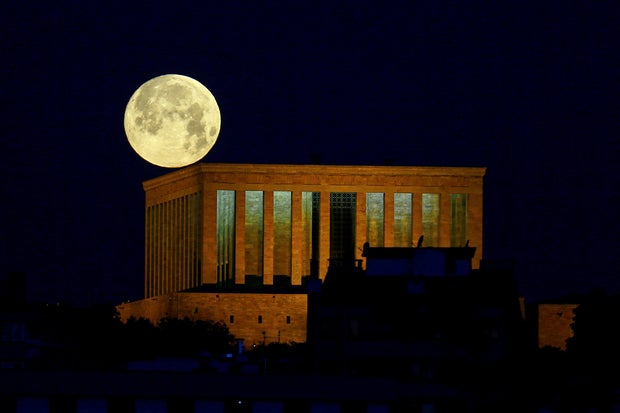
Turkey
The full moon is seen over the Anitkabir, the mausoleum of modern Turkey's founder Mustafa Kemal Ataturk, in Ankara, Turkey, on May 26, 2021.CAGLA GURDOGAN / REUTERSThe Link Lonk
May 27, 2021 at 05:41PM
https://www.cbsnews.com/news/super-flower-blood-moon-2021-lunar-eclipse-photos/
Rare "super flower blood moon" lunar eclipse captured in stunning photos from around the world - CBS News
A sign of hope for an endangered tree species blossomed in Missouri. The Karomia gigas tree is dangerously close to extinction, but a purple flower recently bloomed on one for the first time in recorded history. Flowering plants evolved rapidly in terms of Earth’s lifespan.
Flowering plants are the dominant plant form on Earth, with more than 300,000 species. Photo By Jeffry S / Shutterstock
A truly unique purple flower bloomed on a Karomia gigas tree, according to National Geographic. The website said that Karomia gigas is so rare that only two dozen exist in its native Tanzania, which is part of why the recent flowering—at the Missouri Botanical Garden in St. Louis—is so special. The other part is that until now, the tree’s flower had never been seen in recorded human history.
Flowering plants went from first bloom to the dominant plant form on Earth in about 40 million years, which is a short period of time when discussing life on Earth. In her video series Plant Science: An Introduction to Botany, Dr. Catherine Kleier, Associate Dean of Faculty in the College of Agriculture, Food, and Environmental Sciences at California Polytechnic State University, said there are as many as 400,000 species of flowering plants.
Diversity in Dispersal
Conifers, ferns, and mosses were around long before flowering plants and they took a long time to evolve and diversify, so what’s the deal with flowers?
“The answer may lie in the fact that many flowering plants are both pollinated and dispersed by animals,” Dr. Kleier said. “An animal moving pollen between plants could become more specialized and get pollen from only one type of plant. Now, the plants pollinated by that animal are reproductively isolated from other plants.
“If an animal disperses a seed to a new environment, it can be in a new island, figuratively speaking,” she said. “That is, the animal has dispersed the seed to a new location where it can no longer breed with its old population, so it becomes reproductively isolated, and speciation occurs.”
An Inflorescence by Any Other Name…
An interesting point related to the diversity of flowers is how they’re described. Other than the actual names of the 400,000 species of flowering plants, Dr. Kleier said that botanists don’t seem to have nearly as many words to describe their flowers.
“When I think of flower shapes, I generally think of symmetry—flowers can be radially symmetrical or bilaterally symmetrical,” she said. “There are a few descriptors like tube-shaped or bell-shaped flowers, but other terms would be reserved for specific flowers, and botanists don’t use them broadly.
“Most wildflower ID books will use color; others will use inflorescence types.”
Dr. Kleier said that inflorescence describes how flowers are arranged on the stem. For example, a single flower on a stem is called a solitary inflorescence, while flowers that alternate up the stem are an inflorescence that’s called a raceme. If a raceme is tightly compressed on the stem, it’s called a spike.
“An inflorescence that has numerous flowers forming a sort of umbrella shape is called an umbel, from the Latin umbella, meaning ‘sunshade,’ which also gives us the word umbrella,” Dr. Kleier said.
For now, the world will have to wait to see how botanists describe the purple flower of the Karomia gigas.
Three Flower Mound police officers were shot Wednesday night in an incident involving a barricaded person, according to the Flower Mound Police Department.
Police responded just after 7 p.m. to a 911 call about a suicidal person in a home in the 2900 block of Termaine Drive, near the Flower Mound Library.
Officers tried to make contact with the male subject. Just after 8 p.m., he fired a gun at them, striking three FMPD officers.
Two officers were taken to local hospitals in stable condition. As of 11:30 p.m. only one remained hospitalized. The third officer was cleared by medics on scene and not transported.
Officers returned fire but did not make contact with the subject. As of 11:30 p.m., it is still an active situation and there remains a heavy police presence in the area. Police are asking residents to avoid the area.
The year’s biggest full moon, known as the Super Flower Moon, rose in a clear evening sky over the Sydney Opera House on Wednesday to the delight of amateur photographers positioned just across the water to capture the moment.
The moon was at the closest point to Earth in its orbit, making it appear about 7% larger and 15% brighter than normal.
The May full moon is known as the Flower Moon as it occurs when spring flowers are in bloom.
This Super Flower Moon will also feature the first total lunar eclipse in more than two years, during which the moon will pass through the Earth's shadow. It will appear red, which is known as a blood moon, because light is scattered through the Earth's atmosphere, much like during a sunset.
The eclipse will be seen in Sydney when the moon is much higher in the sky.
The eclipse was due to take place in the early morning hours in western North America, with people in Alaska and Hawaii poised to get the best views. It will also be visible in southern Chile and Argentina.
Stargazers in all of Australia and in New Zealand and parts of Southeast Asia will be able to see the eclipse on Wednesday evening.
:strip_exif(true):strip_icc(true):no_upscale(true):quality(65):fill(FFF)/cloudfront-us-east-1.images.arcpublishing.com/gmg/LR3BJ6DBK5ANBC2DKTLZI7MUQ4.jpg)



/cloudfront-us-east-2.images.arcpublishing.com/reuters/3TSPCBZP4NIQ7BZX5QBPZSOFLM.jpg)


