Rechercher dans ce blog

Tuesday, September 1, 2020

Couple nurtures flower garden - The Hillsdale Daily News

flower.indah.link

HILLSDALE - Marriages, like gardens, flourish when they are tended with care.

After a year and a half of tying the knot, Craig and Susie Burchfield have found that as their love grows for one another, so do their flower gardening skills.

The newly married couple has found serenity in flower gardening together in their retirement years. They met on treadmills at the Hillsdale County Senior Services Fitness Center. Now, they do more walking outside and have since turned their side and back yards at 21 Warren St., Hillsdale, into a cozy and peaceful haven.

"Two years ago I had a large neglected deck that came off the back of the house," Craig Burchfield said. "We met at the same time. It wasn't a plan - it just happened."

Whether he's referring to the relationship or the garden, one can only speculate, but the birds that visit the backyard haven are grateful for the colorful playground they frequent.

"It's a lot of work, but it's worth it," he said.

With tall 30-year arborvitaes to hide in while five bird feeders are filled daily, everything from gold finches to hummingbirds visit the garden. The idea came to add three more arborvitaes, then another rose of Sharon bush, beebombs and more, showing a nurturing touch for gardening in the small area that blooms year-round.

"It's always evolving," Susie Burchfield said. "We have black-eyed Susans, geraniums, munson, coleus and begonia. It all just happened from redoing the deck. And, we started with one bird feeder."

The couple enjoys sitting inside as well as outside. But if they're inside looking out the sliding doors onto the deck, they are distracted away from their television.

"It's like live entertainment," Susie Burchfield said. "In the winter we have woodpeckers with their red bellies, along with blue jays and finches. It just goes to show that people with a patio and sliding glass doors can create a little haven, making an exciting place out of a small area."

One thing does lead to the next, they admitted. After putting in a stone walkway along the side of the house, flower gardens began to expand, wrapping around the house.

Craig said he really didn't have any interest in flowers until retirement. After working at Hillsdale Tool 34 years, he finds the activity relaxing and satisfying. Susie, also retired, worked in customer service at Fairway Products for 39 years.

They are grateful for their newfound love for each other and their shared love for flower gardening and all that it brings, noting that "it keeps growing."

Friend Florence Arnold said she was astounded by the beauty of the small space outside on the couple's deck.

"I talked them into sharing what they've done after seeing it for myself," Arnold said. "It really goes to show how flowers add to the beauty of our homes."

The Link Lonk


September 01, 2020 at 09:42PM
https://www.hillsdale.net/news/20200901/couple-nurtures-flower-garden

Couple nurtures flower garden - The Hillsdale Daily News

https://news.google.com/search?q=Flower&hl=en-US&gl=US&ceid=US:en

Triple Hike Challenge celebrates unique yellow flower - FOX 5 Atlanta

flower.indah.link

If you’re a longtime Good Day Atlanta viewer, you’ve heard us talking about Monadnock Madness — an annual spring “triple hike challenge” featuring climbs up Arabia, Stone, and Panola Mountains.  

But those three locations are just as beautiful in the fall, especially with the blooming of unique yellow daisies — something hikers can find out for themselves now thanks to a month-long challenge starting today.

This year’s Daisy Days Triple Hike Challenge runs throughout the month of September, aiming to get local adventurers to explore our area’s three famous “monadnocks” (which are granite outcroppings, in case you didn’t know).  

Sign up for FOX 5 email alerts

During the challenge, folks can hike each of the three mountains on their own or join small, socially-distanced group hikes, filling out a “passport” along the way. There are some special prizes for those who complete all three hikes — although we’re not about to spoil the secrets of that prize!  

The event is a joint program of the Arabia Mountain Heritage Area Alliance, Davidson-Arabia Mountain Nature Preserve, Friends of Panola Mountain State Park, Panola Mountain State Park, and the Stone Mountain Memorial Association.

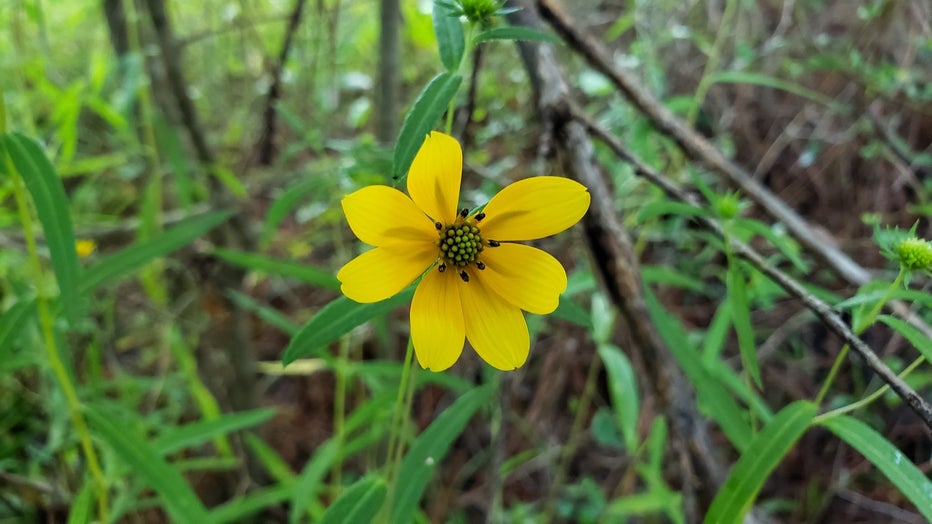
Rangers at all three locations say fall is especially beautiful due to the yellow daisies which are in full bloom at this time of year; the flowers (which are technically sunflowers) are native to the granite outcroppings here in the Southeast, growing out of shallow patches of soil on the mountains.   

So … ready to take a hike?  Click here for more information on the Daisy Days Triple Hike Challenge — participation is free, although there are parking fees at Stone Mountain and Panola Mountain. Access to Panola Mountain is also limited, so make sure to check out the schedule for hikes before heading out there yourself.

Download the FOX 5 Atlanta app for breaking news and weather alerts.

The Link Lonk


September 01, 2020 at 08:49PM
https://www.fox5atlanta.com/news/triple-hike-challenge-celebrates-unique-yellow-flower

Triple Hike Challenge celebrates unique yellow flower - FOX 5 Atlanta

https://news.google.com/search?q=Flower&hl=en-US&gl=US&ceid=US:en
Dodder uses the flowering signal of its host plant to flower - EurekAlert

flower.indah.link
IMAGE

IMAGE: Dodder Cuscuta australis on a soybean host plant: The parasite is flowering and has already produced seed capsules. It uses its host's flowering signal for flower formation. view more 

Credit: Jingxiong Zhang, Kunming Institute of Botany, Chinese Academy of Sciences, China

The plant genus Cuscuta consists of more than 200 species that can be found almost all over the world. The parasites, known as dodder, but also called wizard's net, devil's hair or strangleweed, feed on other plants by attaching themselves to their hosts via a special organ, the haustorium, and withdrawing nutrients from them. They have neither roots nor leaves. Without leaves, they are hardly able to photosynthesize. Without roots they cannot absorb nutrients and water from the soil. On the other hand, they are integrated into the internal communication network of their host plants and can even pass on warning signals from plant to plant (see our press release Dodder: a parasite involved in the plant alarm system, July 24, 2017).

A team of scientists led by Jianqiang Wu, who has been the leader of a Max Planck Partner Group at the Kunming Institute of Botany, Chinese Academy of Sciences, now asked how the parasites manage to synchronize flowering with their hosts. They had observed that plants of the Australian dodder (Cuscuta australis) adjusted the time of their flowering to that of their respective host plant species.

Flower promoting signal FT from the host also determines the flowering time of the parasite

"The flowering time is controlled by leaves, as leaves can sense environmental cues and synthesize the flowering signal, a protein named FLOWERING LOCUS T (FT), which travels through the plant vascular system. We therefore wondered how a leafless parasite such as Cuscuta australis controls the timing of its flowering," says lead investigator Jianqiang Wu. In 2018, his team had sequenced the genome of C. australis and found that many genes important for regulation of flowering time were lost in C. australis genome. Therefore, C. australis seems to be unable to activate its own flowering mechanism.

Based on the fact that FT proteins are mobile signals, the researchers hypothesized that dodder eavesdrops on the flowering signals produced by the leaves of its host and uses them for producing its own flowers. To prove this eavesdropping scenario, they used genetically modified host plants in which the expression of FT genes had been altered, and this indeed affected the flowering time of the parasite. They also coupled the FT protein to a green fluorescent protein (GFP) as a tag and detected the host plant's flower promoting signal in the parasite: The tagged FT protein had migrated from host to parasite.

For dodder, it is the best strategy to synchronize flowering with that of its host. If it flowers much later than its host does, it may not be able to produce seeds at all, as the nutrients in the host are rapidly drained by the host's reproductive tissues. The host may even rapidly die before the parasite can even starts to produce seeds. However, if dodder flowers too early, its growth is likely prematurely ended and it may not be able to produce as many seeds as the dodder plants whose flowering time is synchronized with that of their hosts.

Regressive Evolution: Gene loss as an advantage

In the course of evolution, plant parasites have lost certain traits and "outsourced" physiological processes. As a result, various genes in their genomes may be lost. "This work establishes that for a plant parasite, losing control over flowering processes can be advantageous, as it allows the parasite to hijack its host's mobile flowering signals for its own use. It can thereby readily synchronize its physiology with that of its host", says co-author Ian Baldwin, director of the Department Molecular Ecology at the Max Planck Institute for Chemical Ecology. Because of the gene loss, dodder may be able to better adapt to the parasitic lifestyle and ultimately increase its fitness.

###

Original Publication:

Shen, G., Liu, N., Zhang, J., Xu, Y., Baldwin, I. T., Wu, J. (2020). Cuscuta australis (dodder) parasite eavesdrops on the host plants' FT signals to flower. Proceedings of the National Academy of Sciences of the United States of America, DOI: 10.1073/pnas.2009445117

https://doi.org/10.1073/pnas.2009445117

Further information:

Dr. Jianqiang Wu, Kunming Institute of Botany, Chinese Academy of Sciences, 132# Lanhei Road, Heilongtan, Kunming,Yunnan Province, China 650201, e-mail wujianqiang@mail.kib.ac.cn

Prof. Dr. Ian Baldwin, Max Planck Institute for Chemical Ecology, Hans-Knöll-Straße 8, 07745 Jena, Tel. +49 3641 57-1101, E-Mail baldwin@ice.mpg.de

Contact and Picture Requests:

Angela Overmeyer M.A., Max Planck Institute for Chemical Ecology, Hans-Knöll-Str. 8, 07743 Jena, Germany, Tel. +49 3641 57-2110, E-Mail overmeyer@ice.mpg.de

Download of videos and high-resolution images via http://www.ice.mpg.de/ext/downloads2020.html

Disclaimer: AAAS and EurekAlert! are not responsible for the accuracy of news releases posted to EurekAlert! by contributing institutions or for the use of any information through the EurekAlert system.

The Link Lonk


September 01, 2020 at 02:08AM
https://www.eurekalert.org/pub_releases/2020-08/mpif-dut082720.php

Dodder uses the flowering signal of its host plant to flower - EurekAlert

https://news.google.com/search?q=Flower&hl=en-US&gl=US&ceid=US:en

Flower Power - Virginia Living

flower.indah.link

How to keep your bouquet fresh on hot summer days. 

People love having fresh flowers in their homes, but it can be a real downer when a gorgeous bouquet begins to droop after just three days. Hot summer temperatures make it even more difficult to keep your flowers perky and healthy. However, there are a few ways to preserve those flowers for a few extra days.

“Change the water and recut the stems daily with a good pair of kitchen shears or gardening snips. This gives the flowers a fresh drink. Much like for us, clean water is more beneficial,” says Melissa Swan, owner of Honey Bee’s Florist in Staunton. Also, keeping the flowers cool and out of direct sun will help extend the life of your bouquet for at least three more days, Swan says. 

Abby Long-Chick with Blakemore’s Flowers in Harrisonburg says to keep in mind the five-second rule. “If a fresh flower stem goes without water for more than five seconds, it needs a fresh cut. If your bouquet drinks up all the water in the vase, they need a fresh cut along with refilling its water supply,” she says. 

HoneyBeesFlorist.com, BlakemoresFlowers.com

The Link Lonk


September 01, 2020 at 06:15AM
http://www.virginialiving.com/the-daily-post/flower-power_1/

Flower Power - Virginia Living

https://news.google.com/search?q=Flower&hl=en-US&gl=US&ceid=US:en

Monday, August 31, 2020

Dodder uses the flowering signal of its host plant to flower - Science Daily

flower.indah.link

The plant genus Cuscuta consists of more than 200 species that can be found almost all over the world. The parasites, known as dodder, but also called wizard's net, devil's hair or strangleweed, feed on other plants by attaching themselves to their hosts via a special organ, the haustorium, and withdrawing nutrients from them. They have neither roots nor leaves. Without leaves, they are hardly able to photosynthesize. Without roots they cannot absorb nutrients and water from the soil. On the other hand, they are integrated into the internal communication network of their host plants and can even pass on warning signals from plant to plant.

A team of scientists led by Jianqiang Wu, who has been the leader of a Max Planck Partner Group at the Kunming Institute of Botany, Chinese Academy of Sciences, now asked how the parasites manage to synchronize flowering with their hosts. They had observed that plants of the Australian dodder (Cuscuta australis) adjusted the time of their flowering to that of their respective host plant species.

Flower promoting signal FT from the host also determines the flowering time of the parasite

"The flowering time is controlled by leaves, as leaves can sense environmental cues and synthesize the flowering signal, a protein named FLOWERING LOCUS T (FT), which travels through the plant vascular system. We therefore wondered how a leafless parasite such as Cuscuta australis controls the timing of its flowering," says lead investigator Jianqiang Wu. In 2018, his team had sequenced the genome of C. australis and found that many genes important for regulation of flowering time were lost in C. australis genome. Therefore, C. australis seems to be unable to activate its own flowering mechanism.

Based on the fact that FT proteins are mobile signals, the researchers hypothesized that dodder eavesdrops on the flowering signals produced by the leaves of its host and uses them for producing its own flowers. To prove this eavesdropping scenario, they used genetically modified host plants in which the expression of FT genes had been altered, and this indeed affected the flowering time of the parasite. They also coupled the FT protein to a green fluorescent protein (GFP) as a tag and detected the host plant's flower promoting signal in the parasite: The tagged FT protein had migrated from host to parasite.

For dodder, it is the best strategy to synchronize flowering with that of its host. If it flowers much later than its host does, it may not be able to produce seeds at all, as the nutrients in the host are rapidly drained by the host's reproductive tissues. The host may even rapidly die before the parasite can even starts to produce seeds. However, if dodder flowers too early, its growth is likely prematurely ended and it may not be able to produce as many seeds as the dodder plants whose flowering time is synchronized with that of their hosts.

Regressive Evolution: Gene loss as an advantage

In the course of evolution, plant parasites have lost certain traits and "outsourced" physiological processes. As a result, various genes in their genomes may be lost. "This work establishes that for a plant parasite, losing control over flowering processes can be advantageous, as it allows the parasite to hijack its host's mobile flowering signals for its own use. It can thereby readily synchronize its physiology with that of its host," says co-author Ian Baldwin, director of the Department Molecular Ecology at the Max Planck Institute for Chemical Ecology. Because of the gene loss, dodder may be able to better adapt to the parasitic lifestyle and ultimately increase its fitness.

Story Source:

Materials provided by Max Planck Institute for Chemical Ecology. Note: Content may be edited for style and length.

The Link Lonk


September 01, 2020 at 04:13AM
https://www.sciencedaily.com/releases/2020/08/200831154410.htm

Dodder uses the flowering signal of its host plant to flower - Science Daily

https://news.google.com/search?q=Flower&hl=en-US&gl=US&ceid=US:en

The Best Flower Presses for Taking Up a New Craft - ARTnews

flower.indah.link

Flower pressing is a timeless creative activity where plants and flowers chosen at the peak of their bloom are preserved by applying even pressure to flatten and withdraw moisture. Requiring little technical skill but a lot of patience, flower pressing is an accessible craft suitable for all ages, with the results producing beautiful and delicate botanical elements that can be used in art and craft projects. To choose a flower press, consider which size will accommodate the types of plants you wish to preserve as well as ease of use for your level of experience. Our picks below will help you find the best flower press for your project needs.

1. BestNest Nature Press

This 12-inch by 18-inch press is an ideal size for larger projects and botanical specimens. With a durable MDF construction and basswood veneer that features gentle, rounded edges and plastic feet to protect furniture from scratches. Suitable for professional use, this press includes instructions, blotting paper, and nine sheets of cardboard, with adjustable metal screws and wingnuts in each corner that can be easily tightened as your plants dry without causing any unnecessary shifting. 

2. Natures Pressed Flower & Leaf Press

A simple yet classic design, this moderately sized seven-inch by nine-inch press can accommodate most flowers. With a sturdy plywood frame, it is built to withstand a lot of pressure and can be easily adjusted using the metal buckle and Velcro straps. It comes with six corrugated ventilators and ten sheets of blotter paper as well as instructions and project ideas to get you started. 

3. 4M Green Creativity Pressed Flower Art Kit

This introductory flower pressing kit for children ages five and up includes a lightweight four-inch square flower press with plastic screws and wingnuts that are easy for small hands to tighten. The kit also includes instructions and crafting supplies to create cards, bookmarks, and decorative boxes with your pressed flowers. 

4. Rtree Microwave Flower Press

Depending on size and thickness, it can sometimes take months before flowers are fully pressed and ready to be used. Using the heat of a microwave, this press evaporates moisture from flowers while simultaneously flattening them for immediate results with superior color retention. With a compact five-inch square design that fits in most microwaves, this press includes fabric liners and wool pads that quickly absorb moisture, and thick rubber bands to secure everything in place. 

5. Palo Verde Designs Student Plant Press

This large 12-inch by 18-inch plywood press with oak edge strips ensures consistent pressure. It includes 12 ventilators, 12 sheets of blotter paper, and two cotton-web adjustable straps with buckles. This press does not include any operating instructions, but with a basic design, one could follow standard directions found online. 

The Link Lonk


August 31, 2020 at 09:25PM
https://www.artnews.com/art-news/product-recommendations/best-flower-presses-1202697542/

The Best Flower Presses for Taking Up a New Craft - ARTnews

https://news.google.com/search?q=Flower&hl=en-US&gl=US&ceid=US:en

Cross Street Flower Farm in Norwell to host pick-your-own bouquet event - The Patriot Ledger

flower.indah.link

NORWELL — The flower fields will be alive with the sound of families on Thursday, Friday, and Saturday as Cross Street Flower Farm in Norwell hosts a pick-your-own bouquet event.

Tickets are $25 each and can be reserved online with three, one-hour time slots available —10 to 11 a.m., 11 a.m. to noon, and noon to 1 p.m. The event will be held rain or shine. Tickets have already sold out for several time slots.

Attendees should bring a pair of scissors from home to cut their flowers, but a mason jar will be provided by the farm for the bouquet that is picked. Each attendee is allowed to cut 20 flowers and spend up to an hour in the fields.

Children under 10 years old can attend for free with an adult who has purchased a ticket. Two children are allowed per adult.

Masks must be worn when standing within 20 feet of another attendee or farm staff member.

Parking for the event is available on Jacobs Lane along the side of the flower fields, as well as at the Jacobs Pond Trailhead parking lot.

For more information, visit crossstreetflowerfarm.com.

The Link Lonk


September 01, 2020 at 01:27AM
https://www.patriotledger.com/news/20200831/cross-street-flower-farm-in-norwell-to-host-pick-your-own-bouquet-event

Cross Street Flower Farm in Norwell to host pick-your-own bouquet event - The Patriot Ledger

https://news.google.com/search?q=Flower&hl=en-US&gl=US&ceid=US:en

Featured Post

FIRST-PERSON: Keeping the flower beds blooming - Kentucky Today

flower.indah.link By NEENA GAYNOR Since moving to our new home, each season has brought its own surprises. In the winter, we collec...

Popular Posts